Key takeaways
- The IRRRL is available only to refinance an existing VA-guaranteed loan into a new VA loan.
- You need at least 210 days since your first payment due date and six consecutive monthly payments.
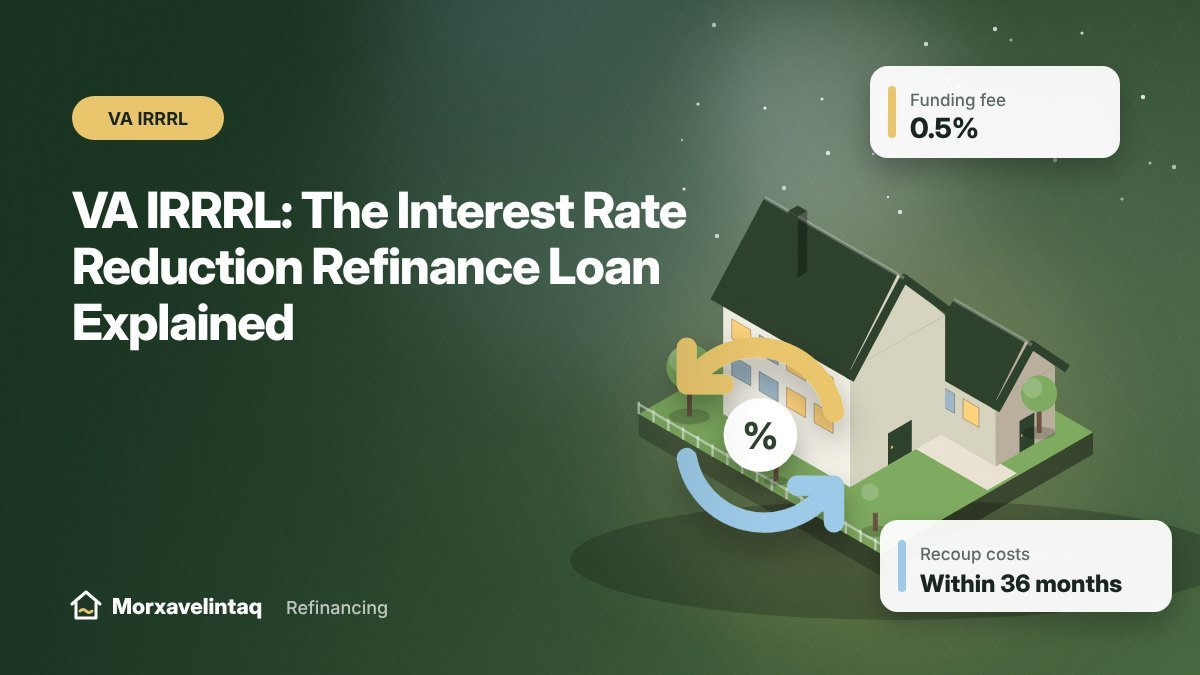
- Closing costs must generally be recouped through monthly savings within 36 months.
- The VA funding fee is 0.5% unless you're exempt.
- Appraisals and income verification are usually not required by the VA, though lenders may require them.
Often called a "VA streamline," the Interest Rate Reduction Refinance Loan (IRRRL) helps veterans lower their rate or move from an adjustable to a fixed rate with less paperwork than a standard refinance. Congress added consumer protections in 2018 to prevent repeated refinances that don't benefit borrowers.
Eligibility requirements
- Existing VA loan on the property you're refinancing.
- Seasoning: the later of 210 days after the first payment due date on the current loan, or six consecutive monthly payments made.
- Occupancy: you must certify you previously lived in the home. You don't need to live there now, which means IRRRLs can be used on former residences that are now rentals.
- No cash out, aside from small adjustments.
Net tangible benefit and recoupment rules
The VA requires the refinance to benefit you:
- Fixed to fixed: the new rate must be at least 0.5 percentage points lower.
- Fixed to ARM: the new rate must be at least 2 percentage points lower.
- ARM to fixed: allowed even if the rate is higher, for stability.
- Recoupment: fees and closing costs must generally be recouped through lower monthly payments within 36 months. Certain items like the funding fee, escrow and prepaid interest are excluded from this test.
Costs to expect
| Cost | Details |
|---|---|
| VA funding fee | 0.5% of the loan; waived for exempt veterans |
| Lender fees and title | Varies; can usually be rolled into the loan |
| Discount points | Optional; up to two points can be financed |
| Appraisal | Usually not required by the VA |
Example: a veteran owes $310,000 at 7.0%. An IRRRL at 6.25% lowers principal and interest by about $150 a month. Closing costs, excluding the funding fee and escrow, total $4,200. Recoupment: $4,200 ÷ $150 = 28 months, within the 36-month limit. The 0.5% funding fee of $1,550 is financed, unless the veteran receives disability compensation and is exempt.
Watch out for aggressive solicitations
Veterans often receive mailers urging repeated refinances, sometimes with offers to skip payments. Skipped payments aren't free; that interest is built into the new loan. Before agreeing, compare the new rate, total costs and recoupment timeline from at least two lenders. The VA and CFPB have both warned about churning.
IRRRL vs. VA cash-out refinance
If you need cash, an IRRRL won't work. A VA cash-out refinance requires full underwriting and an appraisal, and the funding fee is 2.15% for first use or 3.3% for subsequent use. See our VA funding fee guide for details.
How to compare IRRRL offers
Because many lenders offer IRRRLs and solicit aggressively, comparison shopping is especially valuable. Ask each lender for an official Loan Estimate for the same loan amount and lock period, then compare:
- The interest rate and any discount points
- Section A origination charges and lender credits
- The recoupment calculation showing months to recover costs
- Whether the new loan term matches or extends your remaining term
- The cash to close, if any
If one lender's rate is lower only because of points, calculate whether you'll keep the loan long enough to benefit. Our guide on whether mortgage points are worth it explains how.
Term considerations
If you're seven years into a 30-year VA loan, an IRRRL into a new 30-year term lowers your payment but adds seven years of payments. Ask lenders about a 25-year or 20-year IRRRL instead, or plan to keep paying your old payment amount so you stay on your original payoff schedule. Lowering the rate while keeping the timeline is how an IRRRL delivers its biggest long-term savings.
When an IRRRL may not be the best choice
If you have substantial equity and want to remove the VA loan entirely, perhaps to free up entitlement for a future VA purchase, a conventional refinance may make more sense. And if you need cash for improvements or debt consolidation, a VA cash-out refinance or a home equity product would be required instead. An IRRRL is best when your main goal is simply a lower rate or a move from an adjustable to a fixed rate.
Frequently asked questions
Can I use an IRRRL if I've moved out?
Yes. You need to certify that you previously occupied the home.
Does an IRRRL use more of my VA entitlement?
No. The new loan replaces the old one using the same entitlement.
Can I add or remove a borrower?
Generally the veteran must remain on the loan. Removing a veteran borrower typically isn't allowed with an IRRRL. Ask your lender about your specific situation.