Key takeaways
- Lenders re-verify your credit, employment and bank balances right before closing.
- New debt, job changes and unexplained deposits are the most common last-minute problems.
- When in doubt, call your loan officer before making any financial move.
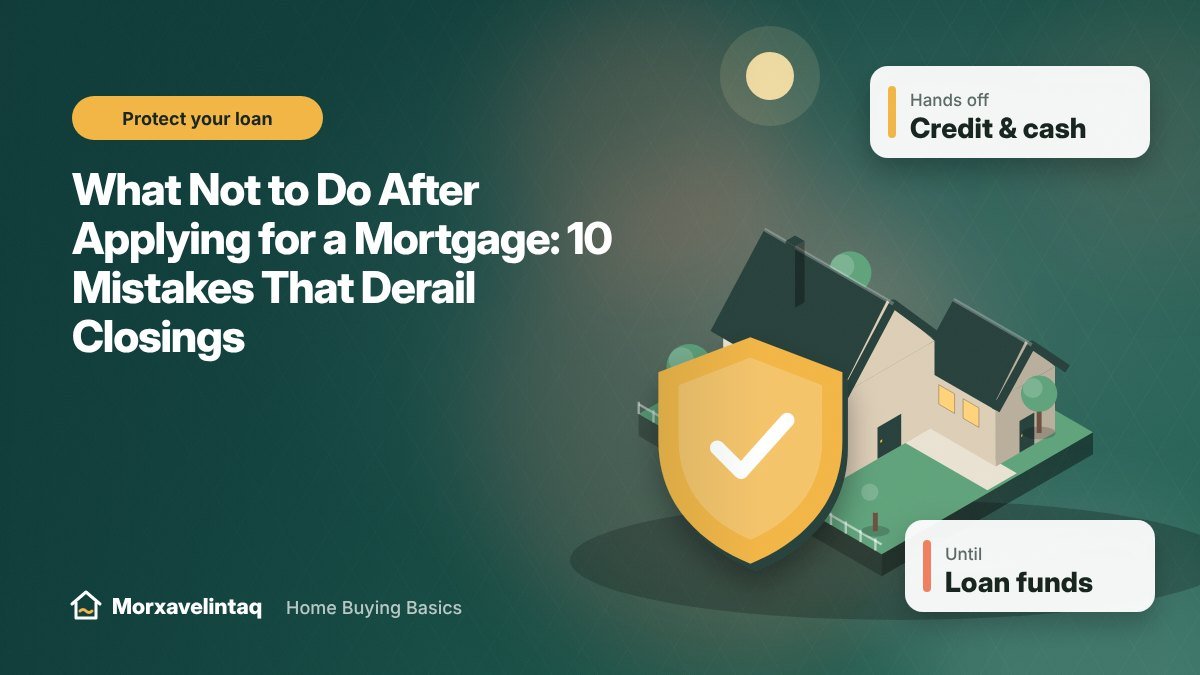
Getting approved for a mortgage feels like the finish line, but the loan isn't final until it funds. Between application and closing, lenders can and do recheck your file. A financial move that seems harmless, like financing new furniture, can push your debt-to-income ratio over the limit or force the underwriter to start over. Here are ten things to avoid and what to do instead.
1. Don't apply for new credit
New credit cards, auto loans, or "buy now, pay later" plans add inquiries and new monthly obligations. Many lenders pull a refreshed credit report shortly before closing, and some use monitoring services that alert them to new accounts during the loan process. Wait until after you've moved in.
2. Don't make large purchases on existing credit
Even without opening a new account, charging appliances or furniture raises your balances and your minimum payments. That can lower your score and raise your debt-to-income ratio. Many buyers wait until after closing to shop for the new house.
3. Don't change jobs or employment type
Switching from salary to commission, going part-time, or becoming self-employed can change how your income is calculated, sometimes eliminating it entirely until you have a history. If a job change is unavoidable, tell your lender before you accept. Our guide on getting a mortgage with a new job explains the rules.
4. Don't move money around without a paper trail
Underwriters need to source your down payment and closing funds. Transferring money between accounts, depositing cash, or consolidating savings can create gaps they'll ask you to explain. Keep money where it is, and save documentation for any transfer you must make.
5. Don't deposit cash or unexplained funds
Cash is hard to source and is often not usable for a down payment. Large deposits from friends, side gigs or sales of personal items need documentation. Gifts from family require a signed gift letter and proof of transfer. See our guide to gift funds for a down payment.
6. Don't co-sign for anyone
Co-signing a car loan or apartment lease for a friend or relative makes that debt count against you, even if you never make a payment.
7. Don't miss or pause any payments
A single 30-day late payment can drop your score significantly and may change your loan pricing or eligibility. Set up autopay on every account during the process.
8. Don't close old credit accounts
Closing a card reduces your available credit and can raise your utilization rate, which can lower your score. Leave accounts open and quiet.
9. Don't ignore requests from your lender
Unanswered condition requests are one of the most common causes of delayed closings. Respond within a day, and if you can't find a document, say so right away so your loan officer can suggest an alternative.
10. Don't sign anything without reading it
Review your Closing Disclosure the moment it arrives and compare it with your Loan Estimate. Ask about any fee that increased or appeared for the first time. Our line-by-line Closing Disclosure guide can help.
What you should do instead
- Keep working the same job and keep pay stubs coming.
- Keep paying every bill on time, preferably on autopay.
- Save statements and receipts for any money that moves.
- Get homeowners insurance quotes early.
- Check in with your loan officer weekly for status updates.
- Read the Closing Disclosure carefully and schedule your final walk-through.
Real-world example: a buyer approved at a 44% debt-to-income ratio finances a $2,400 sofa at $110 a month a week before closing. That small payment pushes the ratio over the lender's limit, and the file goes back to underwriting. The closing slips by ten days, and the rate lock has to be extended for a fee.
If you've already made one of these mistakes
Don't panic, and don't hide it. Lenders find out eventually, and a surprise at the closing table is far worse than a phone call today. Contact your loan officer, explain what happened and ask what documentation they'll need. Many situations can be fixed: a new credit card with no balance may only require a letter of explanation; a new car payment may be offset by paying down another debt; an unexplained deposit may simply need a paper trail. The earlier your lender knows, the more options you have before your rate lock or contract deadlines run out.
Frequently asked questions
Can I use my credit card normally before closing?
Normal everyday spending that you pay off is fine. Avoid large charges that raise your balance, and keep utilization low.
When is it safe to make big purchases?
After the loan funds and the deed is recorded. Your loan officer can confirm when the transaction is complete.
Will the lender find out if I open a card?
Very likely. Lenders commonly pull a refreshed credit report or use credit monitoring before funding, and the new account will appear.