Key takeaways
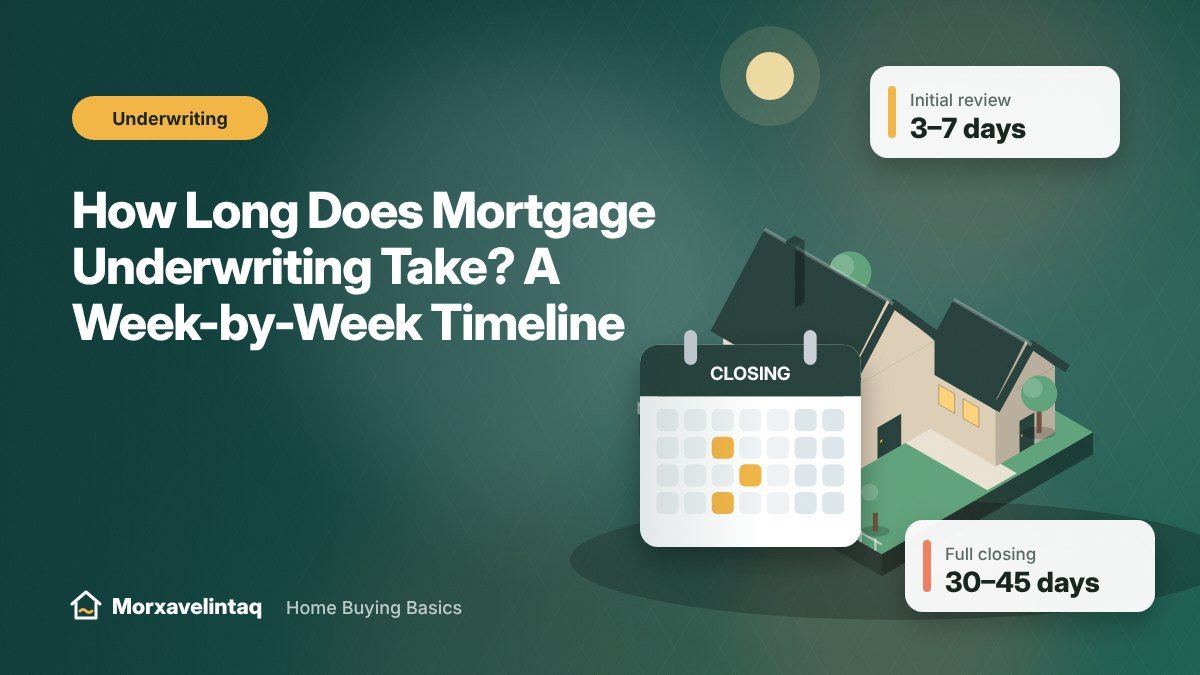
- An underwriter's initial review usually takes three to seven business days once your file is complete.
- The full journey from signed contract to closing typically runs 30 to 45 days.
- Most delays come from missing documents, appraisal issues, or unexplained deposits, not from the underwriter's workload.
- Answering condition requests the same day is the single biggest thing you control.
Once you're under contract, your loan enters underwriting: the stage where a lender's underwriter confirms that you, your finances and the property all meet the loan program's rules. Waiting on that decision is nerve-racking, especially with a closing date on the calendar. Here's what actually happens and how long each piece tends to take.
What an underwriter checks
Underwriters evaluate what's often called the "three C's":
- Capacity: stable income and a debt-to-income ratio within program limits.
- Credit: your credit score and payment history.
- Collateral: the home's appraised value and condition, and clear title.
They also verify that your down payment and closing funds come from acceptable sources and that you'll have any required reserves left afterward.
A typical week-by-week timeline
| Timing | What happens |
|---|---|
| Days 1–3 | Offer accepted. You sign the full application, receive your Loan Estimate within three business days, and indicate you intend to proceed. |
| Week 1 | Processor gathers documents, orders the appraisal and title search, and verifies employment. |
| Weeks 1–2 | File goes to the underwriter for initial review. You receive a conditional approval with a list of conditions. |
| Weeks 2–3 | Appraisal comes back. You and your lender clear conditions such as updated statements or letters of explanation. |
| Weeks 3–4 | Underwriter signs off: "clear to close." The Closing Disclosure goes out at least three business days before signing. |
| Weeks 4–6 | Final verification of employment, signing, and funding. |
Underwriting decisions explained
- Approved with conditions: the most common outcome. You're approved as long as you provide a few more items.
- Suspended: the underwriter needs significant information before deciding, such as a missing tax return.
- Clear to close: all conditions are satisfied. Your lender schedules signing.
- Denied: the loan doesn't fit the program. Ask the lender exactly why; sometimes a different program works.
Common conditions and how to clear them fast
- Large deposits. Any deposit that isn't from your paycheck may need a paper trail. Keep copies of checks, transfer records and gift letters.
- Updated statements. If a new month passes before closing, you'll need the latest bank statement and pay stubs.
- Letters of explanation. Short, factual letters about credit inquiries, gaps in employment or address changes.
- Appraisal issues. Repairs required for FHA or VA loans, or a value that comes in below the purchase price.
- Insurance proof. A homeowners policy binder with the lender listed as mortgagee.
What slows underwriting down
Self-employment income, multiple income sources, recent job changes, condo approvals, and properties with unusual features all add time. Appraisal backlogs in busy markets can add a week or more. Purchase loans also tend to move faster than refinances during refinance booms, because lenders prioritize contract deadlines.
How to keep your file moving
- Upload everything on the lender's initial checklist at once, in readable PDF form.
- Check email and texts daily and respond to requests within 24 hours.
- Don't move money between accounts without telling your loan officer.
- Avoid new credit, big purchases and job changes. Our guide on what not to do after applying for a mortgage covers this in detail.
- Ask your loan officer for a target "clear to close" date and check in on it weekly.
Writing a letter of explanation that clears fast
Underwriters often request a letter of explanation (LOE) for credit inquiries, large deposits, address changes or employment gaps. A good LOE is short, factual and specific. Include the date, the account or event in question, a one- or two-sentence explanation, any supporting document, and your signature. For example: "The $3,200 deposit on August 14 into my checking account ending in 4471 was my federal tax refund. A copy of the IRS deposit record is attached." Avoid long stories, emotional language or extra details that raise new questions.
Appraisal surprises and how they affect timing
The appraisal is often the longest single step. If it comes in below the contract price, your options typically include asking the seller to lower the price, bringing extra cash to cover the gap, requesting a reconsideration of value with better comparable sales, or canceling under an appraisal contingency. Government-backed loans can also require repairs, such as peeling paint on older homes or missing handrails, that must be fixed before closing. Each scenario can add days, so if your contract has a firm closing date, ask your lender when the appraisal is scheduled and follow up the day it's due.
Frequently asked questions
Can underwriting be done in a week?
Yes, for straightforward files with salaried income and all documents submitted upfront. The overall closing can still take longer because of the appraisal and title work.
Does no news from underwriting mean bad news?
Usually not. Files often sit in a queue for a few days. Ask your loan officer where your file is and when to expect the next update.
Can a loan be denied after clear to close?
It's rare but possible. Lenders recheck employment and sometimes credit right before funding, so keep everything unchanged until the loan funds.