Key takeaways
- Biweekly half-payments add up to 26 half-payments, or 13 full payments, a year.
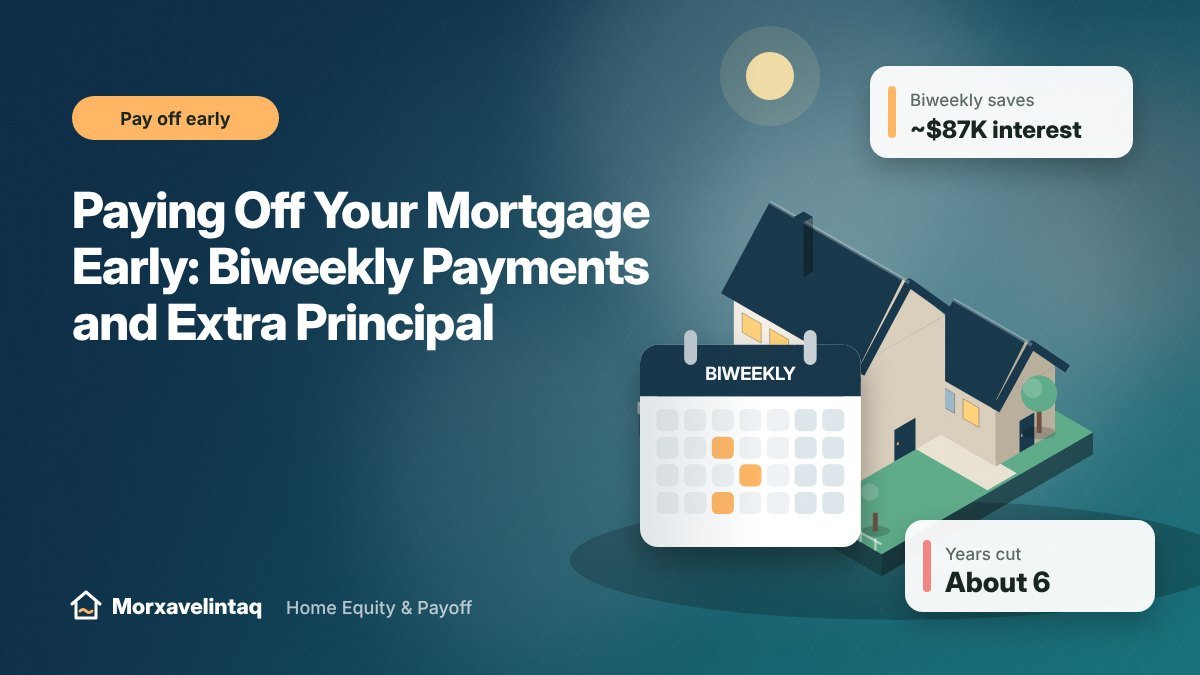
- On a $300,000 loan at 6.5%, that one extra payment a year can save about $87,000 in interest and cut about six years off the term.
- You can get similar results by adding one-twelfth of a payment to each monthly payment.
- Avoid third-party biweekly programs that charge fees.
Paying off your mortgage early can provide real savings and peace of mind. You don't need a windfall; small, consistent extra payments make a big difference over time because they reduce the balance that interest is charged on.
How biweekly payments work
Instead of 12 monthly payments, you pay half your monthly payment every two weeks. Because there are 52 weeks in a year, that's 26 half-payments, or 13 full payments. The extra payment goes to principal.
The savings, by the numbers
On a $300,000, 30-year fixed loan at 6.5% (monthly payment $1,896):
| Strategy | Payoff time | Total interest | Interest saved |
|---|---|---|---|
| Standard monthly | 30 years | $382,600 | — |
| 13 payments a year (biweekly equivalent) | About 24 years | $295,400 | About $87,000 |
| Extra $200 per month | About 23 years | $279,200 | About $103,000 |
Three ways to pay extra
- True biweekly payments through your servicer, if they offer it without fees.
- Add one-twelfth of a payment each month. On a $1,896 payment, that's an extra $158. You get nearly identical results with no special setup.
- Make one extra payment a year from a tax refund or bonus, designated as principal.
Watch out for these pitfalls
- Fee-based biweekly programs. Some third parties charge setup fees or per-payment fees and hold your money until a full payment accumulates. You can do it yourself for free.
- Payments not applied to principal. Clearly mark extra amounts as "principal only" and check your statement.
- Partial payments held in suspense. Some servicers hold half-payments until a full payment arrives. Ask how they handle it.
- Prepayment penalties. Rare on most modern mortgages, but check your note.
Should you pay off your mortgage early?
Paying early is a guaranteed return equal to your interest rate. Compare it to your other options:
- Build an emergency fund first, ideally three to six months of expenses.
- Capture your employer's 401(k) match; it's an immediate return.
- Pay off higher-interest debt, like credit cards, first.
- If your mortgage rate is low, investing may offer higher long-term returns, though with risk.
- If your rate is high or you value being debt-free in retirement, prepaying is attractive.
Prepaying vs. recasting
Extra payments shorten your loan but don't lower your required monthly payment. If you want a lower payment instead, consider a mortgage recast. And if you have PMI, extra payments can help you reach 80% LTV sooner. See how to remove PMI.
Other ways to find money for extra payments
- Round up your payment. Paying $2,000 instead of $1,896 adds about $1,250 a year to principal without much thought.
- Apply raises. When your income increases, direct part of the raise to principal before it disappears into everyday spending.
- Use windfalls. Tax refunds, bonuses and cash gifts can go toward one extra payment a year.
- Refinance into a shorter term when rates are favorable and you're confident in the higher payment.
- Remove PMI once you reach 20% equity, then redirect that amount to principal.
Whatever method you choose, track your progress by checking your principal balance on each statement. Seeing the balance drop faster than the original schedule is a powerful motivator.
How to make sure extra payments go to principal
Servicers don't always apply extra money the way you expect. Some apply it to next month's payment instead of principal, which doesn't save interest. To avoid that, use your servicer's online "additional principal" field, or include a note designating the extra amount as principal only if you pay by check. After each payment, check your statement or online account to confirm the principal balance dropped by the extra amount. If it didn't, call the servicer and ask them to reapply it.
Paying off the last few years
As you approach payoff, request an official payoff statement before sending a final payment, since interest is calculated daily and the last payment rarely matches the regular amount. After payoff, your servicer should send a paid-in-full letter and arrange for the lien release to be recorded with your county. Keep these documents permanently. You'll also need to start paying property taxes and homeowners insurance yourself, since escrow ends with the loan, so set up reminders and savings for those bills.
Frequently asked questions
Do extra payments lower my monthly payment?
No, the required payment stays the same unless you recast. The loan just ends sooner.
Can I stop paying extra anytime?
Yes. Voluntary extra payments give you flexibility you don't get with a shorter-term loan.
Is it better to pay extra early in the loan?
Yes. Early in the loan, more of each payment goes to interest, so extra principal then saves the most.