Key takeaways
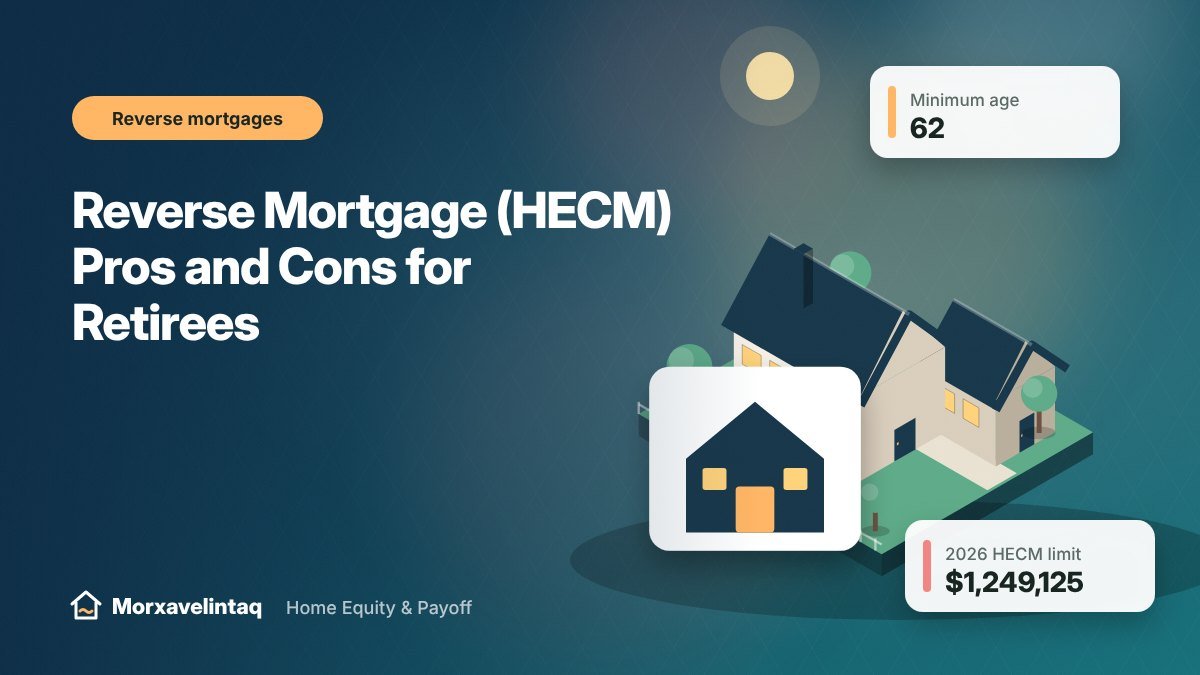
- A Home Equity Conversion Mortgage (HECM) is an FHA-insured reverse mortgage for homeowners 62 and older.
- You don't make monthly mortgage payments, but you must pay property taxes, insurance and maintenance.
- The loan balance grows over time and is repaid when you sell, move out or pass away.
- HECMs are non-recourse: you or your heirs never owe more than the home's value when it's sold.
- Counseling with a HUD-approved counselor is required before you apply.
Reverse mortgages can provide meaningful income or a financial safety net in retirement, but they're complex and costly. Understanding both sides helps you decide whether one fits your plans.
How a HECM works
Instead of paying a lender each month, the lender pays you, or you draw from a line of credit. Interest and mortgage insurance are added to the balance each month. You keep the title to your home. The loan comes due when the last borrower or eligible non-borrowing spouse leaves the home permanently.
Eligibility basics
- At least one borrower is 62 or older.
- The home is your primary residence.
- You own the home outright or have significant equity.
- You complete HUD-approved counseling.
- You pass a financial assessment showing you can keep paying taxes, insurance and maintenance.
How much you can get
The amount depends on the age of the youngest borrower or eligible non-borrowing spouse, current interest rates, and the lesser of your home's value or the HECM maximum claim amount, which is $1,249,125 for 2026. Older borrowers and lower rates generally mean more money available.
Ways to receive the money
- Lump sum (fixed-rate HECMs)
- Monthly payments for life (tenure) or a set period (term)
- Line of credit that grows over time if unused
- A combination of these
Pros
- No required monthly mortgage payment, freeing up cash flow.
- Stay in your home as long as you meet loan obligations.
- Non-recourse protection for you and your heirs.
- Growing line of credit can act as a long-term safety net.
- Proceeds are generally not taxable because they're loan advances.
Cons
- High upfront costs, including a 2% initial mortgage insurance premium, origination fees and closing costs.
- Ongoing annual mortgage insurance of 0.5% of the balance.
- Growing balance reduces the equity left for you or your heirs.
- Default risk if you fall behind on property taxes, insurance or maintenance.
- Impact on benefits: doesn't affect Social Security or Medicare, but improperly managed proceeds could affect Medicaid or SSI eligibility.
Protections for spouses
If only one spouse is on the loan, an eligible non-borrowing spouse may remain in the home after the borrower dies, if conditions are met and the spouse was disclosed at closing. Make sure both spouses understand these rules before signing.
Example: a 72-year-old homeowner with a $400,000 paid-off home takes a HECM line of credit and leaves most of it untouched as a reserve. Years later, when a large medical bill arrives, she draws from the line rather than selling investments during a market downturn.
Alternatives to consider
- Downsizing to a less expensive home
- A home equity loan or HELOC, if you can afford payments
- Property tax relief programs for seniors
- State and local home repair assistance
Questions to ask during HECM counseling
Counseling is your chance to get independent answers. Bring your questions and, ideally, a family member or trusted advisor:
- How much could I receive at my age and home value, and how does that change with each payout option?
- What are the total upfront costs, and how much will my balance grow over 5, 10 and 15 years?
- What happens if I need to move into assisted living or a nursing home?
- How would my spouse be protected if only I'm on the loan?
- How will this affect what my heirs receive?
- Could I meet my goals with downsizing, a HELOC, or local property tax relief instead?
Avoiding reverse mortgage scams
Be cautious of anyone who pressures you to take a reverse mortgage to buy an annuity, an investment or a home improvement service. Watch for unsolicited offers, promises of "free homes," or requests to sign over your property. Legitimate HECMs require independent counseling, and you have a right to cancel within three business days after closing in most cases. If something feels rushed, step back and talk to a HUD-approved counselor or a trusted advisor.
Frequently asked questions
Can I lose my home with a reverse mortgage?
Yes, if you fail to pay property taxes and insurance, don't maintain the home, or move out for more than 12 consecutive months.
What happens to the house when I die?
Heirs can repay the loan and keep the home, sell it, or turn it over to the lender. If the loan exceeds the value, heirs can satisfy it for 95% of the appraised value.
Are there reverse mortgages other than HECMs?
Yes, proprietary reverse mortgages exist for higher-value homes. They aren't FHA-insured and have different terms.