Key takeaways
- A divorce decree assigns responsibility between ex-spouses, but it doesn't change the mortgage contract with the lender.
- Both borrowers stay legally responsible until the loan is refinanced, assumed, or paid off.
- The most common solution is refinancing into the name of the spouse keeping the home.
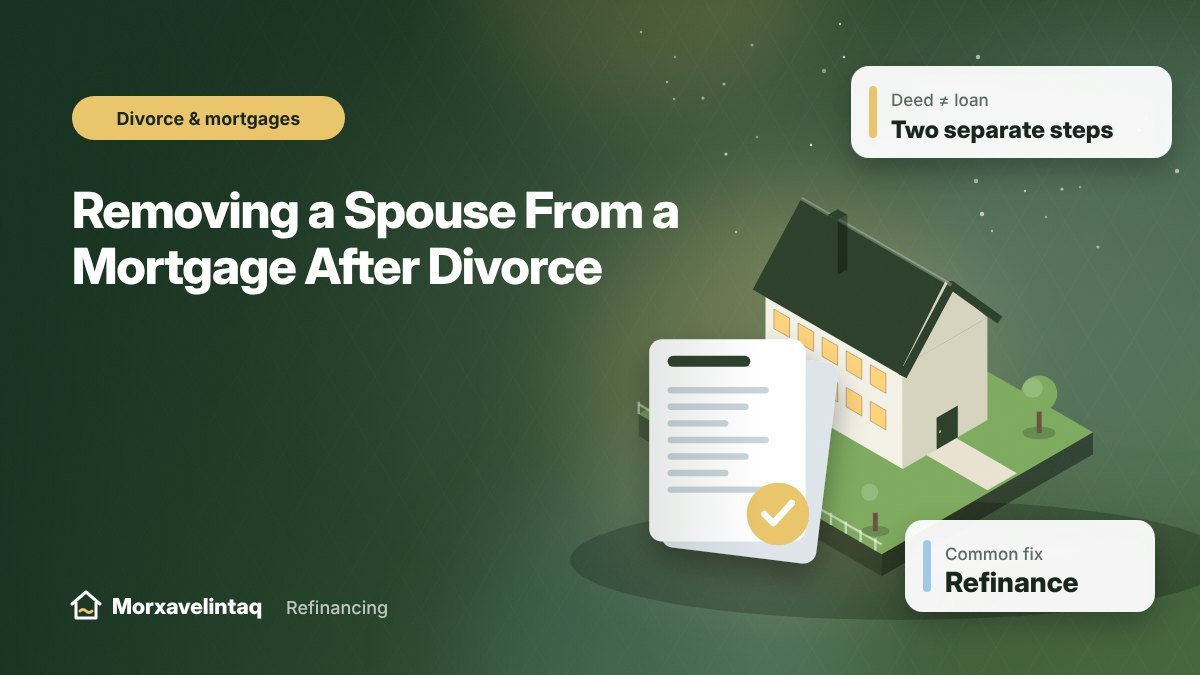
- Removing someone from the deed (with a quitclaim deed) is separate from removing them from the loan.
Divorce often involves deciding who keeps the house. But even when the court awards the home to one spouse, the lender doesn't care what the decree says. If both names are on the mortgage, both are responsible. Late payments hurt both credit reports. Here's how to separate the loan properly.
Deed vs. mortgage: two separate things
- The deed shows who owns the home. A quitclaim or warranty deed can transfer one spouse's ownership to the other, usually as directed by the divorce decree.
- The mortgage (or note) is the loan agreement. Removing a borrower requires the lender's involvement.
Never sign away ownership through a quitclaim deed without a plan to remove yourself from the loan too. Otherwise, you could owe the debt on a house you don't own.
Option 1: refinance in one name
The spouse keeping the home applies for a new mortgage on their own. The new loan pays off the joint loan, releasing the other spouse. The remaining spouse must qualify alone based on their income, credit and debts. Court-ordered alimony or child support received can count as income once it's documented and expected to continue, often for at least three years.
If the departing spouse is owed a share of equity, a cash-out refinance can provide the buyout. Fannie Mae allows an equity buyout between divorcing co-owners to be treated as a limited cash-out refinance in some situations, which can mean better pricing. Ask your lender.
Option 2: loan assumption with release of liability
FHA, VA and USDA loans are assumable, and some lenders allow a divorcing spouse to assume the loan and release the other borrower. This keeps the original interest rate, which can be very valuable if it's low. The remaining spouse must still qualify. Read more in our assumable mortgage guide.
Option 3: loan modification or release
Some servicers will release a borrower through a modification if the remaining borrower qualifies alone. This is less common, but it's worth asking, especially when refinancing would mean a much higher rate.
Option 4: sell the home
If neither spouse can qualify alone, selling pays off the mortgage and splits remaining equity according to the divorce agreement. It's often the cleanest break financially.
Comparing your options
| Option | Keeps current rate? | Must qualify alone? | Typical cost |
|---|---|---|---|
| Refinance | No | Yes | Closing costs |
| Assumption with release | Yes | Yes | Assumption fee |
| Modification / release | Usually | Yes | Varies |
| Sell | Not applicable | No | Selling costs |
Protecting yourself during the process
- Keep payments current during the divorce. Set up alerts so both parties know the payment posted.
- Include a deadline in the divorce agreement for the refinance or sale, and what happens if it doesn't occur.
- Get a copy of the payoff or release letter once the loan is refinanced.
- Work with a family law attorney; this guide is educational, not legal advice.
Timeline: what usually happens, in order
- During negotiations: get a payoff statement, an estimate of the home's value, and a pre-qualification for the spouse who wants to keep the home, so the agreement is realistic.
- In the settlement: spell out who keeps the home, who pays the mortgage until the refinance or sale, the deadline for refinancing, and the equity buyout amount.
- After the decree: the remaining spouse applies to refinance or assume the loan, using the decree to document support income and the buyout.
- At closing: the old loan is paid off, the departing spouse receives any buyout funds, and a deed transfers ownership if it hasn't already.
- Afterward: the departing spouse confirms the old account shows as paid and closed on their credit report.
If the remaining spouse can't qualify yet
Sometimes the spouse keeping the home needs time to build income or credit before refinancing. A divorce agreement can allow a defined period, such as 12 to 24 months, with clear consequences if the refinance doesn't happen, such as a required sale. During that time, both parties remain liable, so payment alerts and shared account access are essential.
Frequently asked questions
Can the lender just take my name off?
Rarely. Lenders approved the loan based on both incomes and usually require the remaining borrower to qualify alone through refinance or assumption.
Will removing my name hurt my credit?
The account will close on your report as paid when refinanced, which typically has little long-term effect. Late payments before then are the bigger risk.
Is there a waiting period to refinance after divorce?
Not usually, but the lender will want the final decree and evidence of support income if you're using it to qualify.