Key takeaways
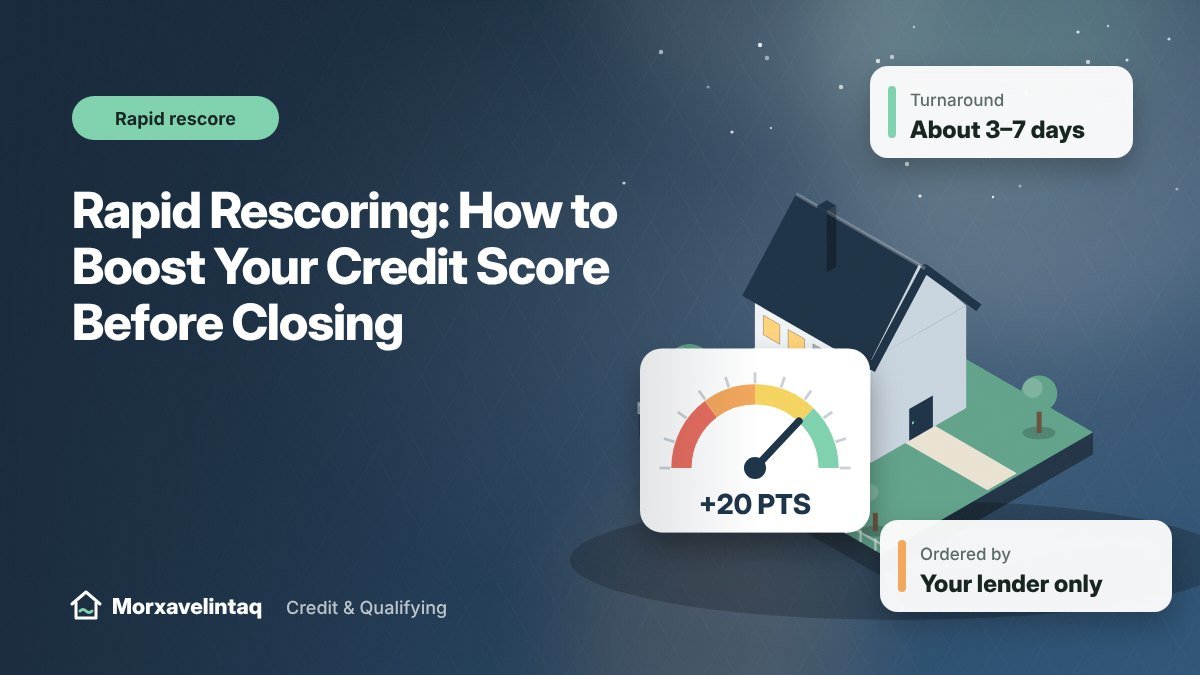
- A rapid rescore is a service lenders use to update your credit report within days instead of waiting for creditors' monthly reporting.
- Only your lender can request it; you can't order it yourself.
- It works for paid-down balances and corrected errors, not for removing accurate negative items.
- It's valuable when you're just below a pricing tier, like 678 vs. 680 or 738 vs. 740.
Mortgage pricing moves in score bands. Being a few points below a threshold can cost you a higher rate or more expensive mortgage insurance for years. A rapid rescore can sometimes bridge that gap before closing.
How a rapid rescore works
- Your loan officer reviews your credit report and identifies changes that could raise your score, such as paying a card balance down from 80% utilization to 10%.
- You make the payment and get proof, such as a statement or a letter from the creditor showing the new balance.
- The lender submits the documentation to a credit reporting agency's rescore service.
- The bureaus update the account, and the lender pulls new scores, often within about three to seven business days.
What a rapid rescore can fix
- Lower credit card balances after a paydown
- Accounts reported as open that you've paid off
- Inaccurate late payments that a creditor confirms in writing were reported in error
- Duplicate accounts or accounts that aren't yours
- Collections you've paid, when the updated status helps under the scoring model in use
What it can't fix
- Accurate late payments
- Bankruptcies, foreclosures or judgments that are correctly reported
- Thin credit history
Cost
Lenders typically pay credit agencies a fee per account per bureau. Under federal rules, the lender can't charge you directly for a rapid rescore, though costs may be built into overall pricing. Ask your loan officer how they handle it.
When it's worth it: an example
A buyer's middle score is 736, and the lender's best conventional pricing starts at 740. One credit card has a $4,000 balance on a $5,000 limit. The buyer pays it down to $400. After a rapid rescore, the middle score rises to 752. The better pricing tier and lower PMI premium save about $45 a month, which adds up to more than $5,000 over ten years.
Score thresholds that often matter
| Threshold | Why it matters |
|---|---|
| 580 | FHA 3.5% down eligibility |
| 620 | Common conventional lender minimum |
| 640 | USDA automated underwriting and many lender floors |
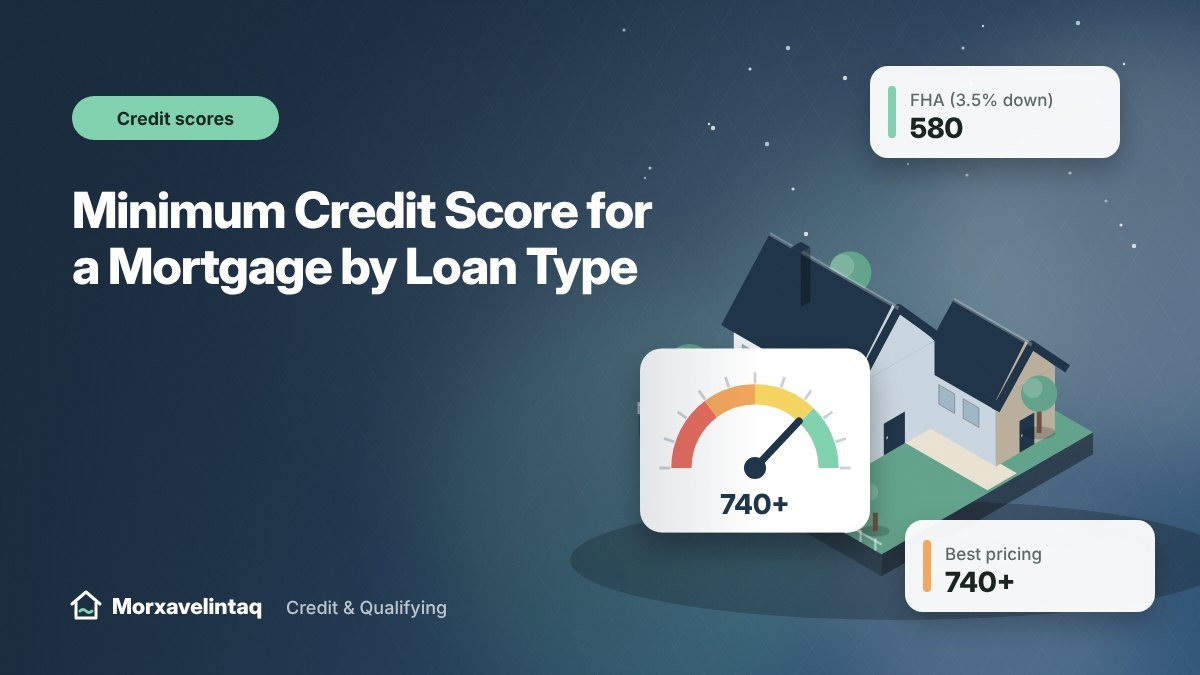
| 680, 700, 720, 740, 760, 780 | Conventional pricing and PMI tiers |
Do-it-yourself steps before applying
If you have a few months before applying, you may not need a rapid rescore. Pay down balances before your statement closing date so lower balances get reported normally. Our guide to the minimum credit score by loan type shows which thresholds matter for you.
Utilization: the fastest lever
Credit utilization, the share of your available revolving credit you're using, is one of the biggest factors in credit scores and one of the few you can change quickly. Scoring models look at both overall utilization and utilization on individual cards. A single maxed-out card can drag down your score even if your total utilization is moderate. Before requesting a rescore, focus on reducing balances on the cards closest to their limits, and aim for overall utilization under 10% if your budget allows.
Paying collections before applying
Whether paying a collection raises your mortgage score depends on the scoring model. Some older models used in mortgage lending give little or no credit for paying a collection, while newer models ignore paid collections. Paying a collection can still be required by the loan program or lender, and it removes a potential underwriting obstacle. Ask your loan officer before paying old collections; they can tell you whether it will help your score, your approval, or both.
A realistic timeline
A rapid rescore works best when there's enough time before closing. Allow a few days to make payments and get proof, another few business days for the bureaus to update, and time for the lender to reprice your loan. If your rate is already locked, ask whether a higher score will be reflected in your lock, since some lenders require a relock or allow a price improvement only in specific situations. Starting the process early in your application gives you the best chance to benefit.
Frequently asked questions
How many points can a rapid rescore add?
It depends on the change. Large utilization drops can raise scores by 20 points or more; small changes may do little.
Can a rapid rescore lower my score?
It reflects your current information. If something negative was recently reported, an updated report could show it.
Can I request a rescore from a credit repair company?
No. Rapid rescore is only available through lenders. Be wary of companies promising fast score boosts for a fee.