Key takeaways
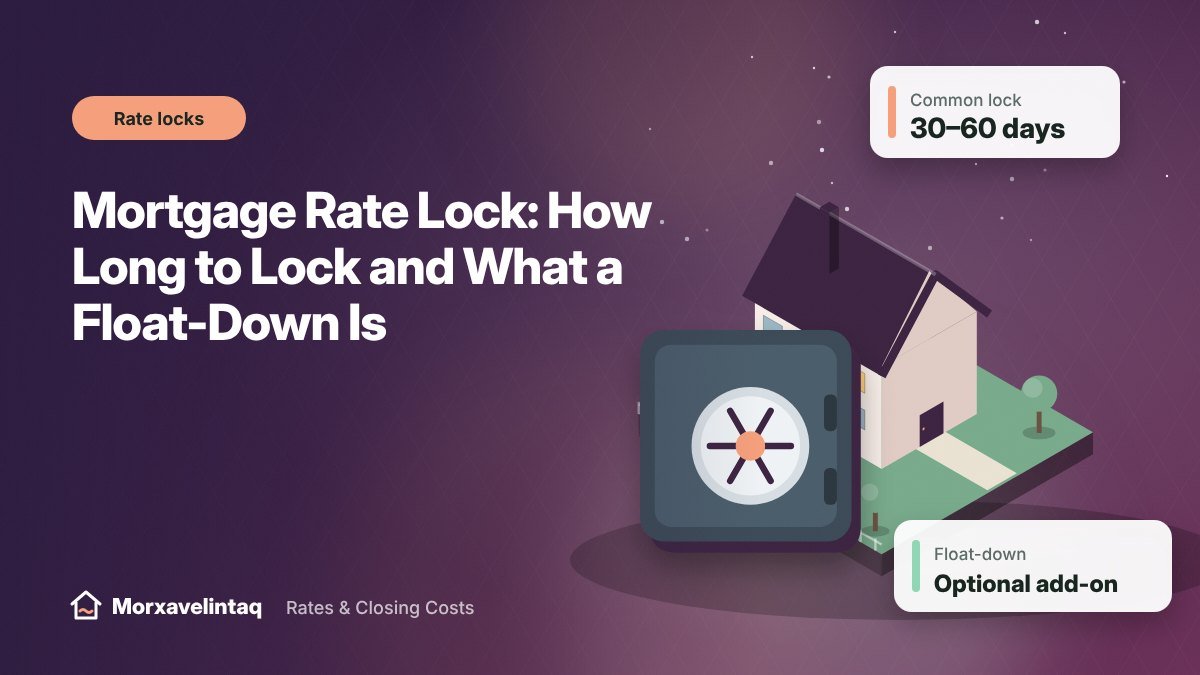
- A rate lock guarantees your interest rate and points for a set period, commonly 30, 45 or 60 days.
- Longer locks usually cost more, either as a higher rate or a fee.
- If closing slips past the lock expiration, extensions typically cost a fee.
- A float-down option lets you capture a lower rate if market rates fall after you lock, usually for a fee or with conditions.
Mortgage rates move every day, sometimes several times a day. A rate lock protects you from increases while your loan is processed. Choosing the right lock period and understanding the fine print can save you money and stress.
How a rate lock works
When you lock, the lender commits to a specific rate and price (points or credits) for your loan, provided nothing material changes, such as your credit score, loan amount, property value or loan type. Get the lock confirmation in writing, showing the rate, points, lock period and expiration date.
How long should you lock?
| Lock period | Good for |
|---|---|
| 15–30 days | Quick refinances or purchases already deep into underwriting |
| 45 days | Most purchase contracts with a typical closing timeline |
| 60 days | Purchases with longer closing dates, condos, or complex files |
| 90+ days | New construction or renovation loans; often priced higher |
Pick a lock that covers your closing date plus a cushion of about a week. A slightly longer lock usually costs less than an extension.
When should you lock?
Most lenders let you lock once you have a signed purchase contract and a complete application. No one can predict rate movements reliably. If the payment at today's rate works for your budget, locking removes uncertainty. Floating (waiting to lock) is a bet that rates will fall, and it can backfire.
Rate lock extensions
If closing is delayed because of appraisal, title or underwriting issues, you may need an extension. Lenders typically charge a fee per day or a fraction of a point for each extension period. Ask upfront:
- What does an extension cost per day or per week?
- Who pays if the delay is the lender's fault?
- Can I relock if my lock expires, and at what price?
What is a float-down?
A float-down option lets you lower your locked rate if market rates drop before closing. Terms vary widely:
- Some lenders charge an upfront fee to add the option.
- Many require rates to fall by a minimum amount, such as 0.25 percentage points, before you can use it.
- You can usually exercise it only once, and only within a window before closing.
Example: you lock at 6.75% with a float-down option that requires a 0.25-point drop. Two weeks later, rates for your loan fall to 6.375%. You exercise the float-down and close at 6.375%. On a $350,000 loan, that's roughly $85 a month in savings.
Things that can break a lock
- A drop in your credit score that changes your pricing tier
- A lower appraisal that changes your loan-to-value ratio
- Switching loan types, such as from conventional to FHA
- Changing the loan amount or occupancy
Avoid financial changes during the lock period. Our guide on what not to do after applying covers this.
Rate locks on new construction
Building a new home can take six months to a year or more, which makes rate risk harder to manage. Builders and their preferred lenders sometimes offer extended locks of 6 to 12 months, often for an upfront fee that may be refundable at closing. Some extended locks include a one-time float-down. Before you commit, compare the cost of the extended lock to the risk you're protecting against, and read what happens if construction runs past the lock expiration. Ask whether the builder's incentive, such as a closing cost credit, requires using their lender, and get quotes from at least one outside lender to see whether the incentive truly saves money.
Lock confirmation checklist
- Interest rate and loan program
- Discount points or lender credits
- Loan amount and loan-to-value used for pricing
- Lock date and expiration date
- Extension cost and policy
- Float-down terms, if any
Keep the confirmation with your loan documents and compare it to your Loan Estimate and Closing Disclosure.
Frequently asked questions
Does locking a rate cost money?
Standard locks of 30 to 60 days are often included in your pricing. Longer locks and float-downs may cost extra.
Can I switch lenders after locking?
Yes, but you'd lose the lock and may lose fees already paid, like the appraisal. A new lender would need a new lock.
What happens if my lock expires?
You'll need to extend or relock. Relocking is usually at the worse of the original price or current market rates.