Key takeaways
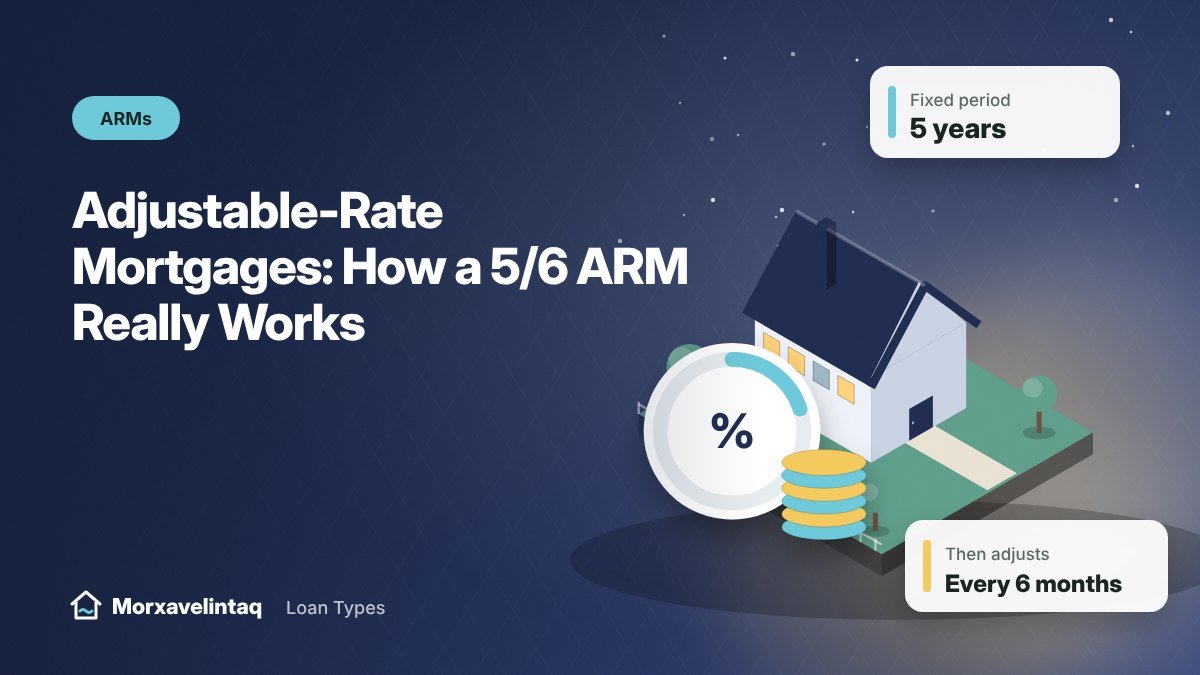
- A 5/6 ARM has a fixed rate for the first five years, then adjusts every six months.
- After the fixed period, your rate equals an index (usually SOFR) plus a fixed margin, limited by rate caps.
- Common caps are 2/1/5: up to 2 points at the first adjustment, 1 point at each later adjustment, and 5 points over the life of the loan.
- ARMs make the most sense if you're confident you'll sell or refinance before the fixed period ends.
Adjustable-rate mortgages start with a lower rate than a 30-year fixed loan, which can save real money in the early years. But that discount comes with uncertainty later. Understanding the mechanics, especially the caps, lets you calculate your worst-case payment before you sign.
Reading the name
The first number is how many years the starting rate stays fixed. The second number is how often the rate adjusts afterward. A 5/6 ARM is fixed for five years and adjusts every six months. A 7/6 ARM is fixed for seven years; a 10/6 ARM for ten. Older ARMs labeled 5/1 adjusted once a year.
The three parts of an ARM rate
- Index: a market benchmark. Most new ARMs use the Secured Overnight Financing Rate (SOFR), usually a 30-day average.
- Margin: a fixed number of percentage points added to the index, set in your loan documents. Margins of 2.75% to 3% are common.
- Caps: limits on how much the rate can change.
After the fixed period, your new rate is index plus margin, rounded per your note, but never more than the caps allow.
How 2/1/5 caps work
| Cap | What it limits | Example on a 5.75% start rate |
|---|---|---|
| Initial adjustment cap: 2% | Maximum change at the first reset | Can rise no higher than 7.75% |
| Periodic cap: 1% | Maximum change at each later reset | Can rise by no more than 1 point every 6 months |
| Lifetime cap: 5% | Maximum over the life of the loan | Can never exceed 10.75% |
Worst-case payment example
A buyer borrows $400,000 on a 5/6 ARM at 5.75%. The 30-year fixed alternative is 6.5%.
- ARM payment for years 1–5: $2,334 per month, versus $2,528 for the fixed loan. That's about $194 a month saved, or roughly $11,600 over five years.
- Balance after five years: about $371,000.
- If the rate jumps the full 2% to 7.75% at the first reset, the payment rises to about $2,803.
- At the 10.75% lifetime cap, the payment would be about $3,570.
Before choosing an ARM, ask yourself whether you could handle that worst-case payment.
When an ARM can make sense
- You expect to move within the fixed period, such as a job relocation or a starter home.
- You expect a significant income increase and could handle a higher payment later.
- Fixed rates are high and you plan to refinance if rates fall, accepting the risk they might not.
- You're buying a jumbo loan where ARM discounts are larger.
When to avoid one
- You're stretching to afford the starting payment.
- You plan to stay in the home long term and value predictability.
- Your income is variable or near retirement.
Questions to ask your lender
- What index does this ARM use, and what's the margin?
- What are the initial, periodic and lifetime caps?
- Is there a rate floor? (Some ARMs can't fall below the start rate or the margin.)
- Is there a prepayment penalty?
- What would my payment be at the first-adjustment maximum and at the lifetime cap?
Your Loan Estimate shows the maximum possible payment and when it could occur, in the projected payments section. The CFPB's Consumer Handbook on Adjustable-Rate Mortgages, which lenders must provide, explains these terms in more detail.
Planning your exit before the reset
If you choose an ARM, plan what you'll do as the fixed period ends. About 6 to 12 months before the first adjustment, compare current fixed-rate refinance options with the projected adjusted rate. Your servicer must send a notice before the first payment change, but don't wait for it. Keep your credit strong and your documents organized during the fixed period so you can refinance quickly if that's the better choice.
Frequently asked questions
Can an ARM rate go down?
Yes. If the index falls, your rate can drop at adjustment, subject to caps and any floor.
Can I refinance an ARM into a fixed rate?
Yes, if you qualify at the time. That's not guaranteed if rates, home values or your finances change.
How do lenders qualify me for an ARM?
For 5-year ARMs, qualified-mortgage rules generally require qualifying at the highest rate possible in the first five years of payments, which can be the fully indexed rate or higher.