Key takeaways
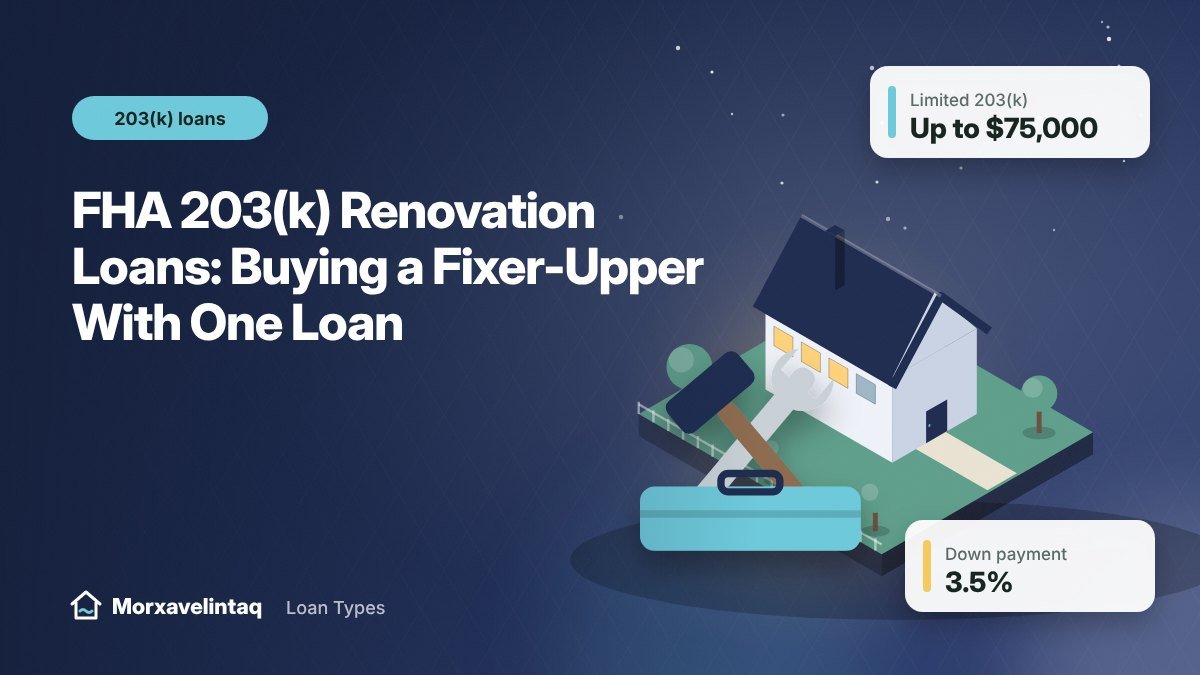
- The FHA 203(k) program combines the purchase price and renovation costs into one loan with as little as 3.5% down.
- The Limited 203(k) covers up to $75,000 in non-structural repairs; the Standard 203(k) handles larger and structural projects with a HUD consultant.
- The loan is based on the home's expected value after repairs.
- Expect more paperwork, contractor bids and a longer closing than a standard FHA loan.
Homes that need work often sell for less, but most buyers can't pay cash for a new roof and kitchen on top of a down payment. The FHA 203(k) loan solves that by financing both in one mortgage, with one closing and one monthly payment.
Limited vs. Standard 203(k)
| Limited 203(k) | Standard 203(k) | |
|---|---|---|
| Repair budget | Up to $75,000 | Minimum $5,000; total loan up to the FHA county limit |
| Structural work | Not allowed | Allowed, including additions and foundation work |
| HUD consultant | Not required | Required |
| Typical projects | Kitchens, baths, roofs, flooring, HVAC, paint, windows | Major remodels, room additions, structural repairs, extensive rehab |
| Can you live elsewhere during work? | Usually you can live in the home | Mortgage payments for up to 6 months can be financed if you can't live there |
HUD raised the Limited 203(k) cap to $75,000 in 2024. Check the latest guidance, as limits can change.
What repairs qualify
Eligible improvements include roof replacement, plumbing, electrical, HVAC, kitchen and bath remodels, flooring, energy-efficiency upgrades, accessibility modifications, and repairs required to meet FHA property standards. Luxury items like swimming pools, outdoor fireplaces and tennis courts aren't eligible. The Standard version can also cover structural work and additions.
How the loan amount is calculated
The maximum loan is based on the lesser of two figures: the purchase price plus repair costs, or 110% of the home's appraised value after the repairs are complete. The appraiser estimates that "as-completed" value using contractor bids and plans. Your loan can't exceed the FHA limit for your county.
Example: a buyer finds a home listed at $220,000 that needs $45,000 in updates, including a roof, kitchen and bathroom. The appraiser estimates an after-repair value of $290,000. Purchase plus repairs equals $265,000, which is less than 110% of $290,000, so the base loan is calculated from $265,000. With 3.5% down, the buyer needs about $9,275 for the down payment plus closing costs.
The 203(k) process step by step
- Get pre-approved with a lender experienced in 203(k) loans; many lenders don't offer them.
- Find a home and make an offer with enough time in the contract, often 45 to 60 days.
- Get detailed bids from licensed contractors. For a Standard 203(k), a HUD consultant inspects the home and writes the scope of work.
- The appraiser determines the after-repair value.
- Close on the loan. Repair funds go into an escrow account, not to you.
- Contractors complete the work. Funds are released in draws after inspections.
- Work must generally be finished within the timeframe in your agreement, often six months.
Costs to plan for
- FHA's 1.75% upfront mortgage insurance premium and annual MIP
- A contingency reserve, typically 10% to 20% of repair costs, for surprises
- HUD consultant fees on Standard loans
- Supplemental origination fees some lenders charge for managing draws
Is a 203(k) right for you?
It's a strong fit if you want to buy in a neighborhood where move-in-ready homes are out of reach, or if you want to customize a home from day one. It's a poorer fit if you're on a tight closing timeline, competing against cash buyers, or not comfortable managing contractors. Fannie Mae's HomeStyle Renovation loan is a conventional alternative for borrowers with stronger credit. Compare base loans in our FHA vs. conventional guide.
Choosing contractors for a 203(k) project
Your contractor can make or break a renovation loan. Lenders typically require licensed and insured contractors who provide detailed, itemized bids. Look for contractors who have completed 203(k) projects before, since they'll understand the draw schedule, inspections and paperwork. Ask for references from past 203(k) clients and confirm the contractor can handle being paid in draws rather than large upfront deposits. A good bid lists materials, labor and timelines for each item, which also helps the appraiser estimate the after-repair value.
Common 203(k) pitfalls
- Underestimating repairs. Older homes often hide problems behind walls. Use the contingency reserve wisely.
- Changing the scope mid-project. Change orders require lender approval and can delay draws.
- Moving in too early. If the home isn't livable, budget for temporary housing or use the Standard 203(k) option to finance payments during construction.
- Choosing the wrong version. If your project includes structural changes, the Limited 203(k) won't work.
Frequently asked questions
Can I do the work myself?
Generally no, unless you're a licensed contractor and the lender allows it. FHA wants qualified contractors and documented bids.
Can I use a 203(k) to refinance?
Yes. Current homeowners can refinance into a 203(k) to fund repairs on their existing home.
What credit score do I need?
FHA allows scores as low as 580 for 3.5% down, but many lenders require higher scores for renovation loans, often 620 to 640.