Key takeaways
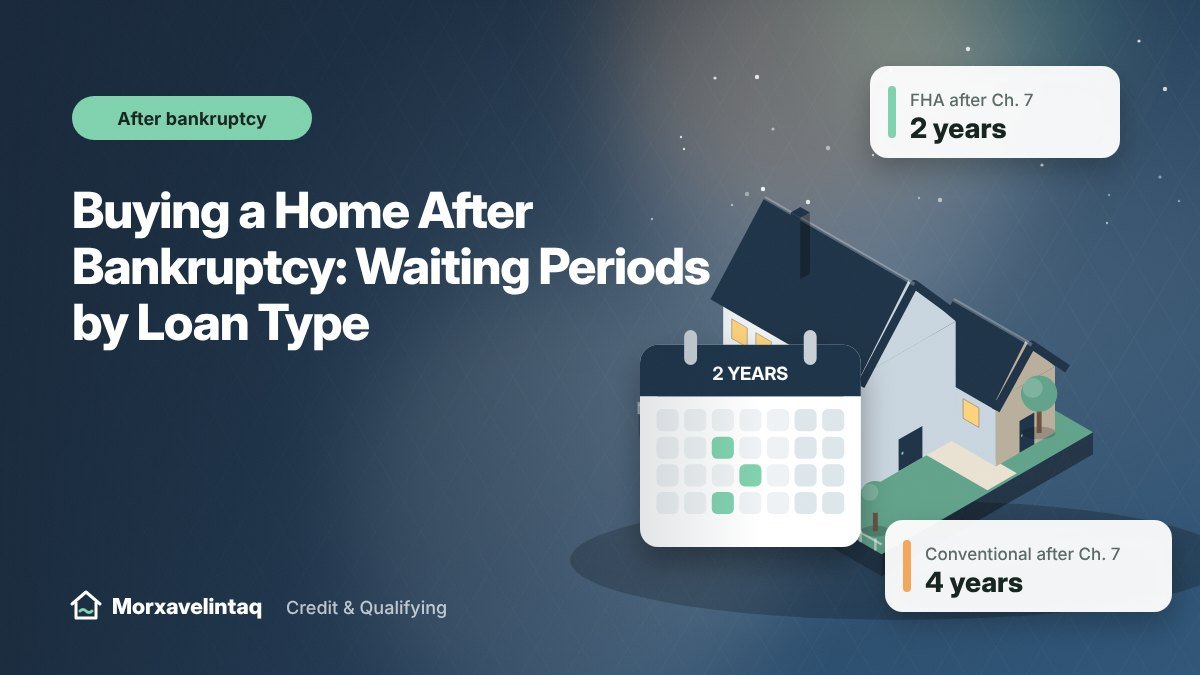
- FHA and VA loans can be possible two years after a Chapter 7 discharge.
- During Chapter 13, FHA and VA may approve a loan after 12 months of on-time plan payments with court approval.
- Conventional loans generally require four years after a Chapter 7 discharge.
- Shorter waiting periods may be available with documented extenuating circumstances.
Bankruptcy doesn't end your chance of owning a home. Every major loan program has a defined waiting period, and many people qualify sooner than they expect, especially with government-backed loans. What you do during that waiting period matters just as much.
Waiting periods after Chapter 7 bankruptcy
| Loan type | Standard waiting period | With extenuating circumstances |
|---|---|---|
| Conventional | 4 years from discharge or dismissal | 2 years |
| FHA | 2 years from discharge | As little as 12 months |
| VA | 2 years from discharge | Case by case |
| USDA | 3 years from discharge | Case by case |
Waiting periods after Chapter 13 bankruptcy
| Loan type | Guideline |
|---|---|
| Conventional | 2 years from discharge; 4 years from dismissal |
| FHA | Possible after 12 months of on-time plan payments with trustee or court approval |
| VA | Possible after 12 months of on-time plan payments with trustee or court approval |
| USDA | Possible after 12 months of on-time plan payments with trustee approval |
What about foreclosure?
| Loan type | Waiting period after foreclosure |
|---|---|
| Conventional | 7 years (3 years with extenuating circumstances, with restrictions) |
| FHA | 3 years from the date the prior lender took title |
| VA | 2 years |
| USDA | 3 years |
If a mortgage was included in your bankruptcy and later foreclosed, conventional lenders may apply the bankruptcy waiting period instead, with documentation. Ask your lender.
What counts as extenuating circumstances?
Events beyond your control that led to the bankruptcy, such as the death of a primary wage earner, serious illness, or sudden job loss through no fault of your own. Divorce alone typically isn't enough. You'll need documentation, and you'll need to show the problem is resolved.
How to rebuild during the waiting period
- Get a secured credit card or credit-builder loan and pay on time every month.
- Keep balances low, ideally under 10% of limits.
- Pay rent on time and keep records; lenders may ask for 12 months of rental history.
- Save aggressively for a down payment and reserves.
- Check your reports to make sure discharged debts show a $0 balance.
- Avoid new collections or late payments; lenders look for clean credit since the bankruptcy.
Example: a borrower's Chapter 7 was discharged in March 2024. By March 2026, they've had two years of on-time payments on two secured cards and their rent, and their score has recovered to 640. They qualify for an FHA loan with 3.5% down. A conventional loan wouldn't be available until March 2028 without extenuating circumstances.
Compare programs with our credit score by loan type guide.
What underwriters want to see after bankruptcy
Meeting the waiting period is only the first test. Underwriters also look for signs that the financial problems are behind you:
- Re-established credit: typically two or more accounts with on-time payment history since the bankruptcy.
- No new derogatory items: late payments or collections after a bankruptcy raise serious concerns.
- Stable income: a consistent two-year employment history.
- Savings: a documented down payment and reserves show you've rebuilt a financial cushion.
- A clear explanation: a brief letter describing the cause and what's changed.
Chapter 13: buying before the plan ends
If you're in an active Chapter 13 plan, buying a home requires extra steps. You'll typically need written permission from your bankruptcy trustee or the court to take on new debt, along with documentation of at least 12 months of on-time plan payments. Work with your bankruptcy attorney and a lender experienced in these files. The trustee will want to see that the new payment is affordable and won't jeopardize your plan payments.
Choosing the right loan after bankruptcy
For many borrowers, FHA is the first option available because of its shorter waiting period and flexible credit standards. VA is often the best choice for eligible veterans, with no down payment and no monthly mortgage insurance. Once you reach the conventional waiting period and your credit has recovered, refinancing from FHA into a conventional loan can remove mortgage insurance. Plan the path ahead of time: buy when you're eligible, then refinance when it makes financial sense.
Frequently asked questions
Does the waiting period start at filing or discharge?
For Chapter 7, generally from the discharge date. For conventional loans after a dismissed bankruptcy, it's from the dismissal date.
Will my rate be higher after bankruptcy?
Your rate depends mostly on your current score and loan program. Rebuilding your score is the biggest factor.
Do I need a letter of explanation?
Usually yes. Lenders want a short explanation of what happened and how your situation has changed.